How Hplc Is Utilized To Examine Peptide Purity
t
@troybujq951
October 1, 2026 · 3 min read
Hplc Laboratory, Hplc Testing Solutions Northeast Biolab As the drug advances in the next phase, nonetheless, it becomes important to optimize the technique and make it much more reproducible. HPLC technique recognition becomes needed when Tox research studies are prepared for preparing IND application declaring. As a result, we have to focus on robust HPLC technique development and evaluation also throughout the earlier phases. In PharmaLabGlobal e-commerce this manner, the approaches utilized in preclinical phase can be flawlessly transferred to the scientific programs and would not require comprehensive HPLC technique advancement and recognition. Peptide purity establishes how much of a sample has the intended series compared to other chemical or organic types. High purity is necessary for reproducible experiments, exact biochemical measurements, and dependable regulative entries.
How much does peptide HPLC testing cost?
The expense of peptide evaluation solution varies substantially based upon which methods your regulatory package needs: HPLC-UV Evaluation: $& #x 24; 300 & #x 2013; & #x 24; 800 per sample (basic purity assessment) LC-MS (Liquid Chromatography-Mass Spectrometry): $& #x 24; 600 & #x 2013; & #x 24; 1,500 per example (molecular weight verification).
Peptide Screening: Hplc & Mass Spectrometry Pureness Verification
For examples of product-level context, compare the anticipated masses for Retatrutide, BPC-157, and Semaglutide. Each peptide has actually a various expected molecular weight, so mass confirmation is not a common badge; it is compound-specific evidence. For a deeper identity-focused description, see Mass Spectrometry Peptide Verification. Stability screening is used to manage if the quality of a medicine substance or drug item is transformed in time by many ecological aspects, such as temperature level, light, and humidity. All peptides marketed by Prax Peptides are strictly meant for in-vitro research study and research laboratory utilize only.- Regulatory companies carefully monitor peptide products, especially those made use of in compounded medication under 503a and 503b standards.
- This links directly with dealing with topics such as peptide storage space and peptide reconstitution.
- That's where HPLC (High-Performance Fluid Chromatography) and MS (Mass Spectrometry) screening can be found in.
- Integrating HPLC analysis into peptide validation hence sustains reproducible and reliable research study.
- That's why mass spectrometry is run along with HPLC-- it confirms the molecular weight matches the target sequence.
Why Purity Issues In Research Study
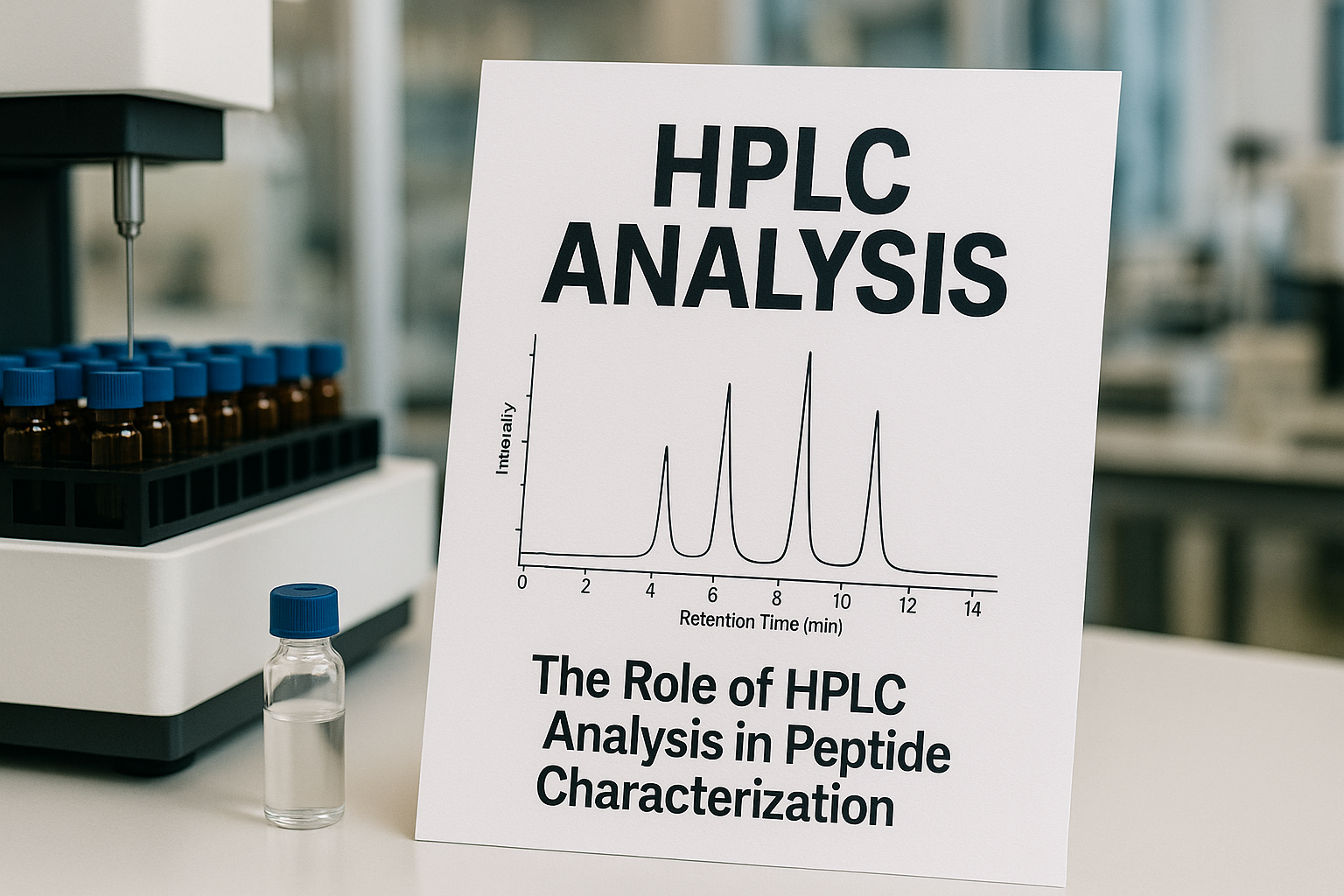
We will pick the most appropriate elution solvent for you according to your example qualities, example kind and the solvent you utilize to dissolve the example. First, a small quantity of the peptide is liquified in a fluid and infused into the HPLC machine. That liquid is after that pushed with a slim tube (called a column) under high stress. In peptide study, the quality of your beginning products straight determines the reliability of your results. High-Performance Fluid Chromatography, typically known as HPLC, is the gold typical analytical technique for analyzing peptide purity. Recognizing what HPLC screening involves and why it matters is important expertise for any type of researcher working with synthetic peptides. Methods utilize either UV/Vis or Fluorescence detectors, appropriate for your healthy protein or small particle. Furthermore, NEBA has substantial framework and years of expertise in qualitative and measurable splittings up utilizing HPLC mass spectrometry discovery of peptide drugs. Solid, semisolid, and fluid solutions of pharmaceutical leads are one essential action in drug development. Techniques are enhanced to confirm the API concentration in your dosing formula, in addition to service harmony and security. In addition, if stereoisomers are part of the formula, we have years of chiral experience at your service. Peptide testing is the analytical process made use of to confirm that a research study peptide is both pure and appropriately identified.